Save $100 on New Garage Door Installation
Renew a Damaged Door With Garage Door Panel Replacement in Winston-Salem, NC
Garage door spring replacement restores a critical part of the lifting system when torsion or extension springs become worn, damaged, or broken. Correct spring selection, controlled tensioning, and balance testing help the door manage its weight and move more smoothly.
Replace Worn Springs Before Door Movement Suffers
Garage door springs help counterbalance the weight of the door every time it opens and closes. Rather than requiring the opener or the person lifting the door to handle its full weight, the spring system stores and releases mechanical energy throughout each cycle. When a spring wears out or breaks, that balance can change immediately.
Garage door spring replacement addresses springs that can no longer support the lifting system correctly. A broken spring may leave the door unusually heavy, prevent automatic operation, or cause visible separation within the spring itself. Developing wear may also appear through changes in balance or movement before complete failure occurs.
Torsion and extension systems operate differently, so the replacement process needs to correspond with the existing garage door configuration. Garage door torsion spring replacement involves components mounted above the door opening, while extension springs typically stretch along the sides of the overhead track system.
Both configurations operate under substantial tension. Stored mechanical energy needs to be controlled during removal and installation. Replacement springs must also be appropriately rated for the garage door rather than selected without considering the door’s weight and configuration.
After installation, spring tension and door balance should be checked together. The goal is to restore controlled lifting so the door can travel without relying on the opener to compensate for an improperly balanced mechanical system.
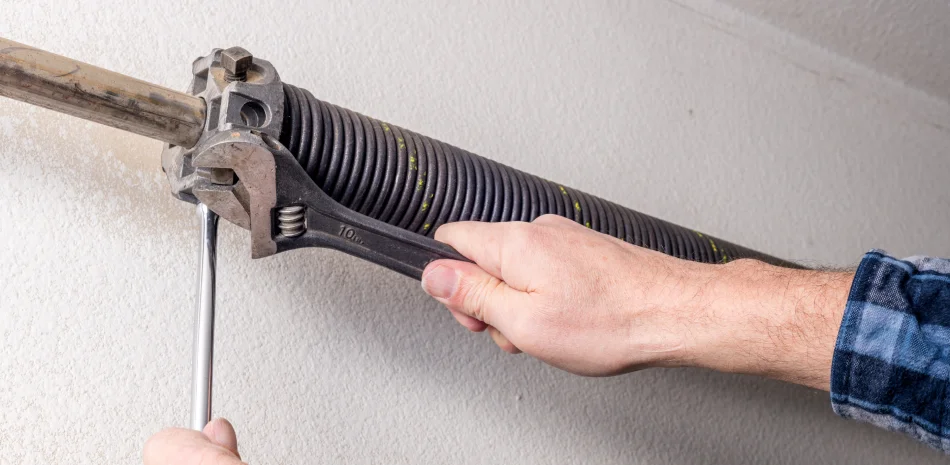
Rebalance Your Door With Correct Spring Tension
Garage door springs are wear components. Each opening and closing movement contributes to a spring’s cycle life, and repeated use gradually fatigues the metal. Eventually, a spring may lose effective tension or break completely.
One common sign of a broken torsion spring is a visible gap in the spring coil. A door may also become extremely difficult to lift because the spring is no longer counterbalancing its weight. If an automatic opener attempts to move a door with a failed spring, the opener may struggle or fail to raise it.
Extension spring problems can also affect balanced movement. Because these springs operate as part of the lifting system, wear or failure can cause changes in the way the door rises and lowers.
Garage door spring adjustment may be appropriate when the system requires tension correction, but adjustment does not restore a spring that has reached the end of its useful life. A worn, damaged, or broken spring may need replacement instead.
The replacement process can include:
- Spring system evaluation: The existing configuration can be checked to identify spring type, visible damage, wear, and conditions affecting door balance
- Controlled tension release: Remaining stored energy must be managed carefully before high-tension spring components are removed or adjusted
- Spring selection: Replacement springs should correspond with the weight, size, and lifting requirements of the garage door
- Spring installation: New torsion or extension springs should be installed according to the configuration of the existing lifting system
- Tension adjustment: Spring tension can be set so the lifting system properly counterbalances the weight of the garage door
- Balance testing: Door movement can be checked after installation to determine whether the spring system is supporting controlled lifting
- Travel checks: The door can be operated through its range to observe movement and confirm that the repaired system functions consistently
High-cycle springs may also be considered when selecting replacement components. Cycle ratings relate to how many opening and closing movements a spring is designed to handle under appropriate operating conditions. Actual lifespan can vary based on usage and other system factors.
Spring selection should not be based on physical appearance alone. Two springs that look similar may have different characteristics and lifting capacities. Using a spring that does not correspond with the door can create balance problems and affect operation.
The spring system also works with cables, drums, tracks, rollers, and other components. If the door has been operating with poor balance, connected parts may show signs of additional strain. Checking movement after spring replacement helps identify whether the lifting system is working together correctly.
Restore Controlled Lifting After a Spring Failure
A broken spring can make a normally manageable garage door feel unexpectedly heavy. This happens because the spring is no longer providing the counterbalancing force used during normal operation. The change can be immediate, which is why a door that worked during one cycle may suddenly refuse to open during the next.
Repeatedly activating the opener is not a suitable way to overcome a failed spring. The opener is designed to automate a properly balanced garage door. Asking it to lift excessive weight can place unnecessary stress on the automatic system.
Handling the spring directly also presents risks. Torsion springs are wound to store mechanical energy, while extension springs stretch during operation. Garage door spring replacement service requires careful control of these forces during removal, installation, and adjustment.
Once a suitable replacement is installed, garage door balance becomes a key measure of the repair. A correctly counterbalanced door should move in a controlled manner without one component being forced to manage an inappropriate share of the weight.
The final travel check provides another opportunity to observe the system. The door should move consistently through the tracks while the lifting components remain properly positioned. If the door rises unevenly or movement remains difficult, additional conditions may need attention.
Spring replacement can also be planned before complete failure when clear deterioration or balance problems are identified. Addressing a worn spring before it breaks may help avoid an unexpected situation in which the garage door cannot be opened normally.
For garage door spring replacement in Winston-Salem, NC, broken coils, declining tension, difficult lifting, or noticeable balance changes can indicate that the spring system needs attention. Correct spring selection, controlled installation, tension adjustment, and balance testing help restore the counterbalancing support required for regular garage door movement.
Frequently Asked Questions About Garage Door Spring Replacement
-
A broken torsion spring may have a visible gap in its coil. The garage door may also become unusually heavy, refuse to open normally, or cause the opener to struggle. Changes in balance or lifting behavior can also indicate a spring problem that should be evaluated.
-
Torsion springs are generally positioned above the garage door opening and operate through controlled winding and unwinding. Extension springs typically stretch alongside the overhead tracks. Both help counterbalance door weight, but their configurations and replacement procedures differ.
-
Continued operation is not recommended. A broken spring changes the balance of the garage door and can leave the opener attempting to move more weight than intended. The door may also become difficult to control manually, so the spring problem should be addressed before normal use resumes.
-
Garage door springs are selected according to the lifting requirements of the door. Size, weight, and system configuration influence the appropriate spring characteristics. An incorrectly matched spring can leave the door poorly balanced and interfere with controlled opening and closing.
-
Balance testing helps determine whether the new spring system is counterbalancing the garage door correctly. The springs, cables, drums, and related components need to work together so the door moves in a controlled manner without placing unnecessary strain on the opener or other parts.
Restore Proper Spring Support for Your Door
Address a broken or worn spring before poor balance places added strain on your garage door. Correct replacement and tension adjustment can restore controlled lifting.